
From winning work to delivering it well.
The work may begin with finding and winning the right clients, improving how work is sold and set up, or protecting margin, capacity and the client experience during delivery. It may also begin with an opportunity or decision that needs a clearer view.
Support may involve advice, a defined implementation project or hands-on help with a particular area of work.
Support may involve advice, a defined implementation project or hands-on help with a particular area of work.
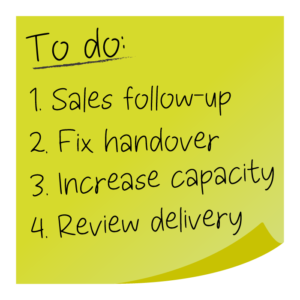
Where the work may begin
Support can begin at any point in the client journey. The best place to start depends on what you want to achieve and what needs to change to make that possible.
01
Win the right type of work
Reach more suitable clients, improve follow-up and qualification, strengthen an offer, review pricing or scope, or decide which opportunities are genuinely worth pursuing.
02
Set the work up to succeed
Improve what happens after the client says yes, including handover, onboarding, information gathering, planning, ownership, approvals and the systems connecting them.
03
Deliver it well and profitably
Protect scope, margin, capacity and the client experience while improving communication, consistency, accountability and what's learned from completed work.
Each part affects the others
Winning, setting up and delivering work are not separate activities. Decisions made in one stage can change what becomes possible, difficult or expensive in another.
What the work may involve
The exact work depends on the situation. It may focus on one area or connect several where that is useful. These are examples, not fixed packages.
Ways to work together
Support can be focused or ongoing, depending on what the situation requires. It may involve advice, a defined implementation project or hands-on responsibility for a particular area of work.
Advisory Support
Advice can focus on a particular question, opportunity or decision, or continue as priorities develop. The work may include research, reviewing options, testing assumptions and providing an independent commercial and operational view.
Implementation Projects
Once the right response is clear, practical work can be scoped to design, build and introduce it. This may include systems, workflows, documentation, outreach, onboarding or delivery processes, with clear responsibilities and an agreed handover
Hands-on Support
Where the business needs more than advice or a one-off project, managed support can take responsibility for a defined area of work. This may involve running projects, coordinating activity, managing suppliers or keeping work moving, adding experienced capacity without creating a permanent role.
How scoping and fees work
The scope depends on what needs to be achieved, the work involved and the level of support required. Defined projects are usually priced as a fixed fee, sometimes split into stages, while ongoing support is normally agreed monthly.
Responsibilities, timing and fees are confirmed before work begins. Advisory, implementation and hands-on support can be combined where that is the most useful approach.
Responsibilities, timing and fees are confirmed before work begins. Advisory, implementation and hands-on support can be combined where that is the most useful approach.
When the situation needs a closer look
Some situations are too broad, connected or uncertain to scope properly from an initial conversation. In those cases, the FARiN Review provides a structured examination of how work is won, set up, and delivered, helping identify the main factors involved and where action is likely to be most useful.
The review turns the findings into clear priorities and practical next steps. It is a standalone paid service, not a required first step.
The review turns the findings into clear priorities and practical next steps. It is a standalone paid service, not a required first step.
Start with a conversation
Talk through the problem, opportunity or decision in front of you, get a clearer view of the situation and decide whether working together would be useful.